
CSC encourages students to March into advising month
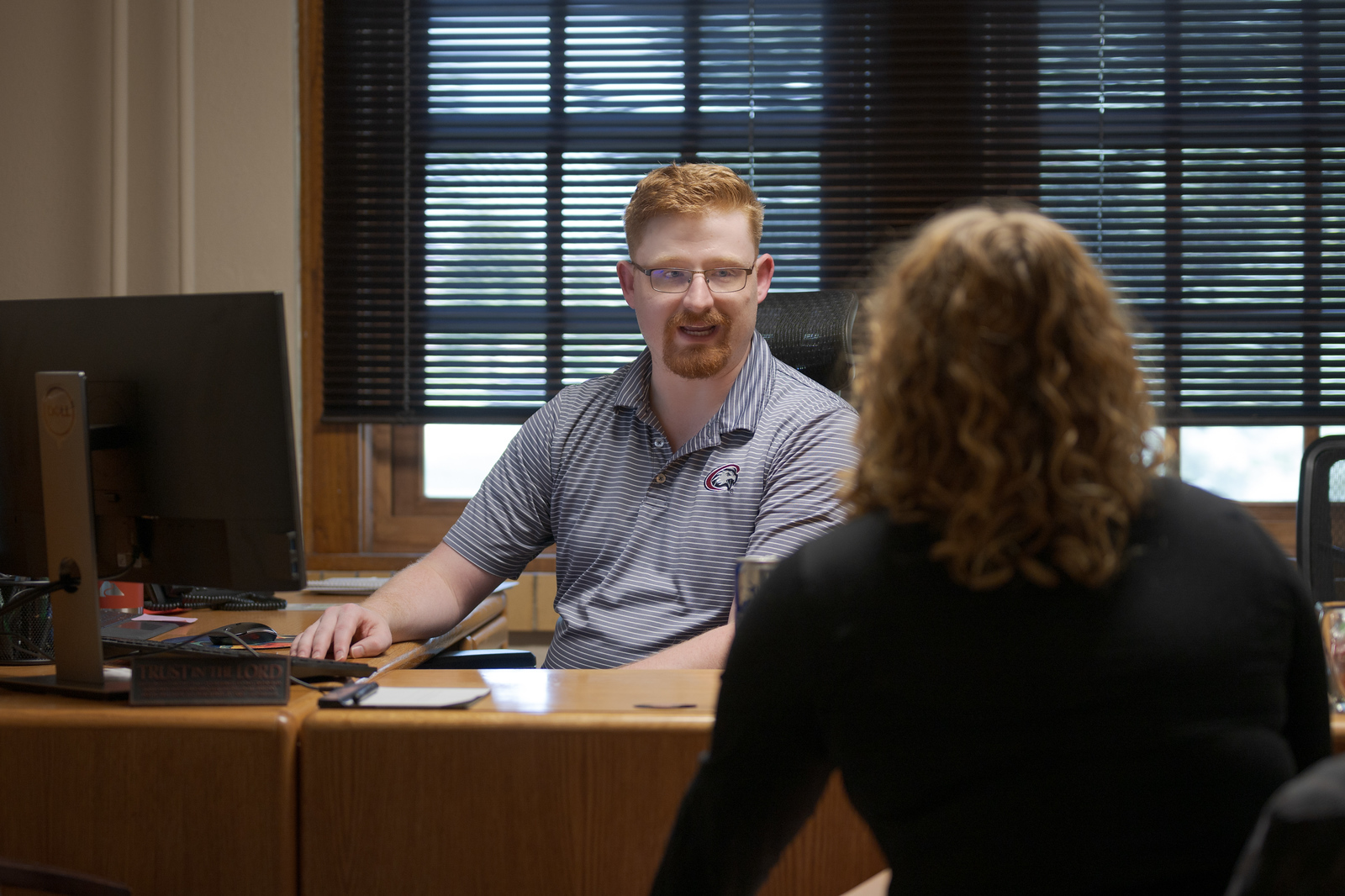
CHADRON – Chadron State College encourages students and advisers to meet throughout March before registration for summer and fall classes opens in late March.
Anna Hutchinson of Riverton, Wyoming, said advising has kept her on track by encouraging her to plan ahead.
“By mapping out required courses early and enrolling in them at the right time, I never worry about missing something critical. That forward-looking approach has given me peace of mind and a clear, confident path to finishing my degree,” she said. “My adviser has a great professional network throughout Nebraska and surrounding states, which has opened doors I would not have found on my own. Through their connections, I have had the opportunity to meet and interact with professionals in my field.”
Many advisers are approachable and effective helping students, Hutchinson added.
“They are welcoming and invested in my success. They take an interest in both my academic and personal life, which makes it easy to meet with them and plan my schedule,” she said.
Students often emphasize the personal dimension of advising relationships. Brock Tines of Grant, Nebraska, said the friendliness of his adviser helped him feel that she was understanding and truly cared about him. She introduced him to Criminal Justice faculty who opened a career pathway he felt called to and gave him the valuable experience of his first police ride-along.
Advising often integrates career preparation from the earliest semesters. Dr. Dawn Brammer, professor of Health and Physical Education, said during advising sessions, she has intentional conversations about where students may want to complete their student teaching internship.
Those early discussions prompt students to reflect on preferences beyond coursework such as school size, community setting, and teaching style.
“By identifying these factors early, we are able to help place them in environments where they are positioned for success,” Brammer said. “As a result, many of our students are ultimately hired within the same districts where they completed their student teaching internships.”
Advising conversations also extend into professional development. Brammer regularly encourages students to participate in conferences and professional organizations.
“For several years, a colleague and I have taken our Health and Physical Education students to the SHAPE Nebraska conference to present with us,” she said. “This builds their confidence presenting in front of professional peers, strengthens their communication skills, and provides meaningful connections to a professional organization that supports them beyond graduation.”
She recalls former student Jordan Cooper as an example of advising’s long-term influence.
“He attended the national SHAPE America Convention with me several years ago,” Brammer said. “He has remained active in Wyoming and was recognized as the 2025 Middle School PE Teacher of the Year for Wyoming.”
Students say those early advising conversations often shape their confidence and career direction. November Diers of Hay Springs, Nebraska, said her adviser has asked her questions about her future that make her think about what she wants to do with her life.
“My adviser has pushed me to become what I am going to be when I graduate. She has given me every resource possible when it comes to adaptive physical education. She has shown me different ways to make that accessible to my students and how to enjoy it myself as well,” Diers said.
Faculty advisers say those moments of growth are just as meaningful from their side of the desk. Jordan Haas, assistant professor of Mathematics, advises students pursuing math education endorsements for grades 6–12 or grades 5–9.
“Some rewards are long-term. They come down the line when former students, who are now current teachers, reach out to say thanks or that a certain piece of advice helped them in their career,” he said.
For Haas, advising victories focus on relationships and perspective. While students may arrive seeking help with registration, conversations often evolve into broader discussions about goals, challenges, and alternative pathways.
Some of the most meaningful moments, Haas said, occur when students reconsider their academic direction entirely.
“A couple of my favorite success stories come from visiting with non-math or non-education majors and discussing a path to math or education,” he said. “Sometimes students just need someone to help them see possibilities they hadn’t considered.”
When students are struggling academically, Haas has often discovered that somewhere, something in their life is applying pressure.
“Once we identify where that pressure is coming from, we can usually find a path to relieve some of it,” he said. “The biggest part of that is letting them know you care about them and their academic careers.”
Drawing on his background in a public school system, Haas helps education majors build connections with K–12 educators and administrators and often knows about student teaching or job opportunities.
While faculty advisers play a central role in career decisions, CSC’s advising structure begins even earlier. START advisers help students establish a strong academic foundation as they transition into college life.
START adviser Josee Sayaloune said when students bring in transfer credits or unique academic experiences, START advisers collaborate closely with faculty advisers to make sure those credits are evaluated thoughtfully and applied in the most beneficial way possible.
“That partnership often helps students stay on track for graduation and feel confident that their previous work is being recognized,” Sayaloune said.
START adviser Channing Jons said START and faculty advisers complement each other in a meaningful way.
“START advisers help students build a strong foundation by guiding them through initial enrollment, orientation, and financial aid planning. Once students transition to their faculty advisers, they gain a deeper level of support. Together, the two advising roles create a supportive experience that helps students pursue their studies with clarity and purpose,” Jons said.
Students who enter CSC with prior college credit say START advising can be especially important.
“My START advisers were a big help in making sure those credits were counted properly,” said Shelby Westinghouse who earned college credits at Hot Springs High School “Because these courses were earned in South Dakota, it was a process to match them with the equivalent CSC courses. However, my advisers made this process stress-free. I think CSC has a smooth advising and class enrollment process.
Category: Education, Family and Consumer Sciences