
Donahue recalls two decades of Art-related trips in Graves Lecture
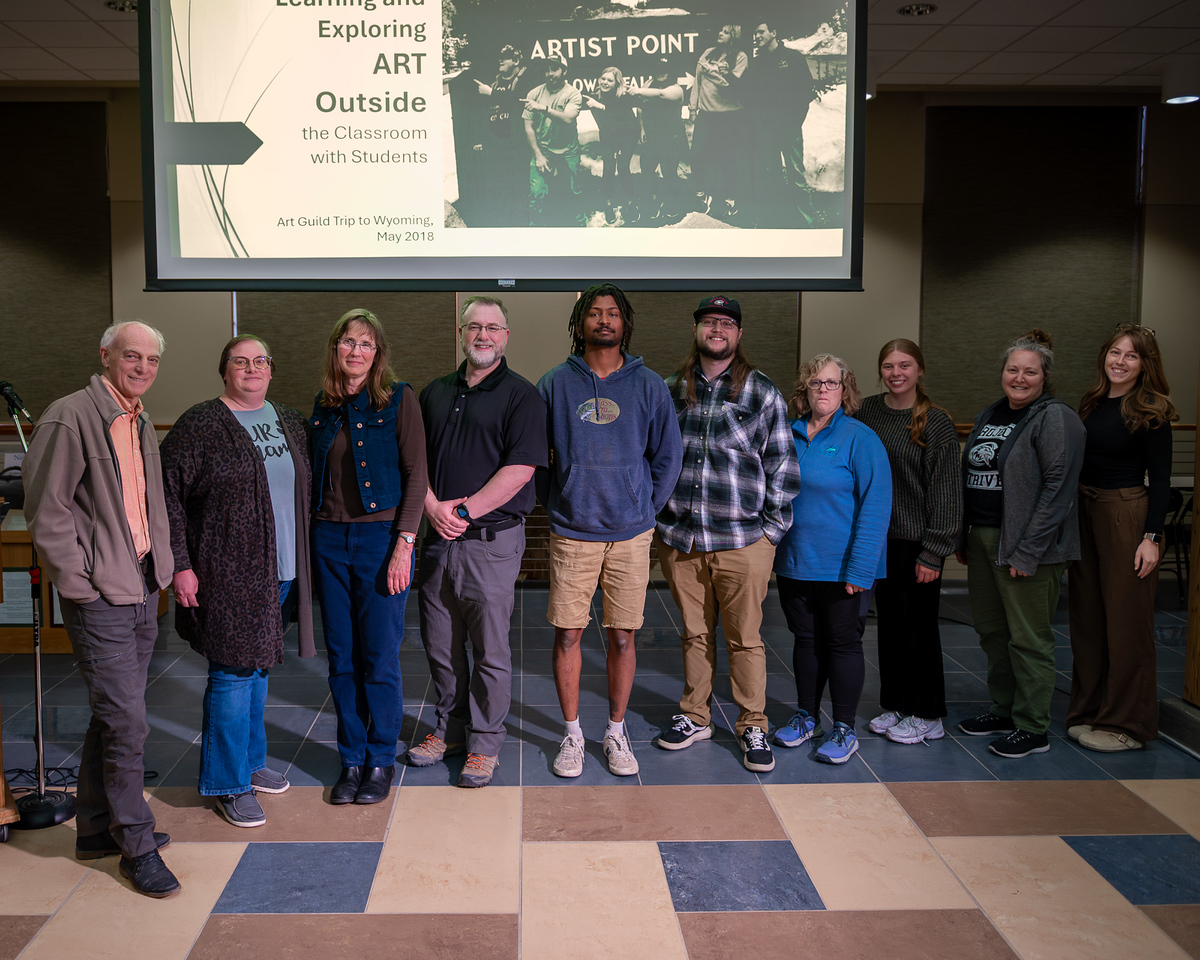
CHADRON – For more than two decades, Chadron State College Art Professor Mary Donahue has taken students out of the classroom and into museums, artist studios, advertising agencies, and cultural landmarks across the country.
During her Graves Lecture April 23, Donahue reflected on the impact those experiences have had on students since she began organizing trips for the CSC Art Guild in 2005.
“Just moving around, seeing and doing, that really is important for learning,” Donahue said. “I think [travel] helps people remember things and helps us become lifelong learners.”
Donahue said travel gives students opportunities to imagine themselves working in creative careers by exposing them to professional artists, designers, museum staff members, and a variety of arts organizations. Donahue said her network of former classmates and professional connections often helped arrange tours and meetings for students.
“My theory about traveling is that it’s important to show the possibilities to students,” she said. “It’s important for them to see people being artists, talk to them, see them doing museum work, creating exhibits, graphic design, or advertising. If they hear from these professionals and see them in their space, they can visualize themselves doing that as well.”
The first trip was a short excursion to Omaha in 2005, where Donahue and her students visited advertising agencies and met professionals in graphic design and marketing. One stop included Bailey Lauerman, a major Nebraska advertising agency with national accounts.
The experience connected Donahue with the American Advertising Federation (AAF) and eventually led to additional opportunities for students to meet working designers and advertising professionals.
Over time, the trips expanded into larger regional tours focused on art, architecture, museums, and professional networking.
After former professor Richard Bird asked Donahue to oversee the CSC Art Guild during her second year at the college, she began organizing annual trips for students. One early excursion took students to Denver, where they visited the Denver Art Museum.
Donahue said seeing famous works in person helps students understand art in ways that photographs in textbooks cannot.
“Seeing real art in person and seeing the size, that’s always important,” she said.
Students later traveled to Minneapolis, where they toured the Minneapolis Institute of Art and visited a Minneapolis advertising agency.
“I hope it’s another good example for students that you keep in touch with people you’re in school with,” she said.
As the trips grew in scope, students began traveling to Utah and New Mexico. In Utah, students visited museums, galleries and natural landmarks tied to environmental and land art.
One recurring destination was the Spiral Jetty, the massive earthwork created by Robert Smithson along the Great Salt Lake.
Donahue used the site to discuss environmental change and the evolution of land art during the 1960s and 1970s. During the lecture, she showed photographs comparing the site in 2015 and 2024 while discussing the shrinking water levels of the Great Salt Lake.
Students also visited national parks near Moab and hiked to Delicate Arch, which Donahue described as a huge piece of nature art.
Trips to Santa Fe and Taos introduced students to Indigenous art traditions, historic architecture, and the history of artist colonies in the Southwest. Students toured the Georgia O'Keeffe Museum, explored Museum Hill in Santa Fe, and visited galleries featuring regional artists.
Donahue also discussed visits to sites connected to artist Nora Naranjo Morse, whose work appears in films and lessons Donahue uses in her art appreciation classes.
At Bandelier National Monument, students explored cliff dwellings connected to ancestral Pueblo communities and viewed pottery linked to artist Maria Martinez.
Donahue said those experiences often leave lasting impressions on students long after graduation.
She recalled receiving a message from a former student who said artwork she encountered during a Santa Fe trip inspired ideas that later influenced her graduate studies and career in visual communication design.
“Taking those trips in your formative years, when the future’s wide open, can really shape people,” Donahue said.
The trips also introduced students to creative careers outside traditional fine arts. In Kansas City, students toured Hallmark Cards and observed illustrators and craftspeople at work. In Salt Lake City, students met employees from arts councils who explained careers in public arts programming, cultural outreach, and arts administration.
“We do these tours and hear from professionals, and I hope they imagine themselves in those roles,” Donahue said.
Students also visited museums and immersive art installations featuring work by artists such as Claes Oldenburg and interactive exhibits at Meow Wolf.
More recent trips have included Wyoming, Seattle, and Las Vegas. During a 2025 trip to Seattle, students visited the Chihuly Garden and Glass, the Seattle Art Museum, and the Museum of Pop Culture.
Donahue said the shared experience of traveling together often encourages curiosity and engagement in ways that traditional classroom instruction cannot.
One image she shared during the lecture showed students standing beneath a billboard near the Utah desert that read, Igniting the Future.
“I made them all get out so I could take this picture,” Donahue said. “I think that’s what we’re doing. We’re igniting the future.”
Category: Art, Graves Lecture Series